SEO for Hospitals

Help patients and families find the right department, verify doctor information and contact the correct facility. Leadsforge Tech improves hospital website structure, approved content and local information, with AEO and GEO work supporting visibility in Google AI Overviews and other AI-assisted search experiences.

Founder with 10+ years in SEOBased in Noida, working across India

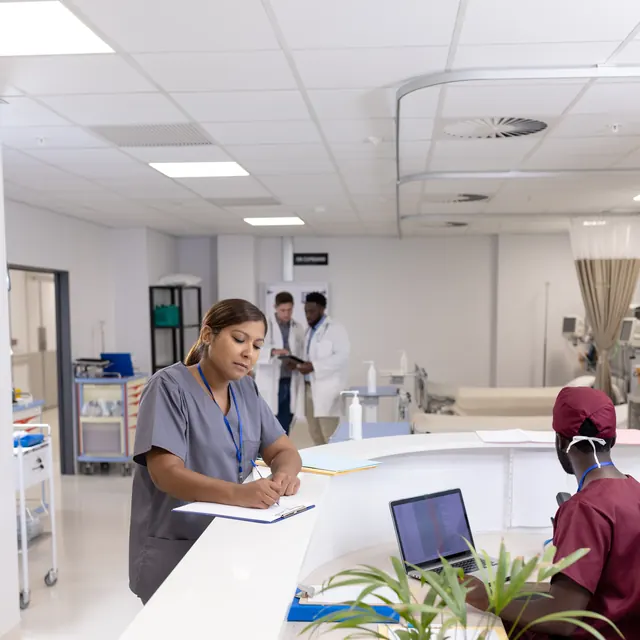
Doctor writing notes at a hospital ward reception desk
Start with priority departments

Free SEO Audit

Share your website, facility locations and the departments you want us to assess. We’ll examine selected pages, public doctor information and facility profiles, then identify the issues needing attention first. This initial assessment covers selected pages and recommended priorities. A complete website audit, detailed AI visibility assessment, content production and implementation are quoted separately.

  • Doctor directory sampleWe check selected entries for useful professional details, relevant department links and consultation information supplied by your hospital.
  • Department-page sampleWe assess whether priority departments explain their services, answer relevant patient questions and direct visitors to the appropriate contact route.
  • Facility informationWe compare public location, contact and service details across selected facility pages and profiles.
Departments, doctors and discovery

Make a large hospital website easier to understand.

A hospital website connects several kinds of information: departments, doctors, procedures, facilities and appointment arrangements. Patients need to move between them without encountering conflicting details or losing track of the location they are viewing.

Our work includes answer engine optimisation (AEO) and generative engine optimisation (GEO). We improve approved department information, practitioner details and answers to practical patient questions. The aim is stronger organic and AI-search visibility, accurate representation of your services and more useful routes from research to contact.

Department descriptions, facilities, accreditations, charges and service availability come from approved hospital records. Details need to distinguish between facilities within the same group.

Your hospital confirms the permitted communication scope. Named clinical and institutional contacts approve the relevant information before publication, with responsibility for future updates established.

How patients and families use hospital information

  1. Identify the relevant service

    Research begins with a department, consultation, procedure or a doctor already known to the patient.

  2. Check the hospital’s services

    Visitors assess the available departments, practitioners and facilities through search results, Maps, AI tools and the hospital website.

  3. Confirm practical arrangements

    Location, consultation availability, published charges and administrative information help them prepare for contact.

  4. Reach the appropriate team

    The website distinguishes routine appointment routes, department contacts and verified emergency contact information.

Who we work with

A plan that reflects your institution.

Hospital websites need different structures depending on their departments, locations and responsibilities.

  • Multi-specialty hospitals

    Connect department information with relevant practitioners, services and consultation arrangements.

  • Single-specialty hospitals

    Organise the depth of information within a specialty without creating overlapping pages for every search phrase.

  • Hospital groups

    Separate group-wide information from the departments, doctors and facilities available at each location.

  • Teaching and trust hospitals

    Help patients navigate institutional websites that also contain academic, research and administrative material.

  • Nursing homes and smaller inpatient facilities

    Present the services, facilities and contact arrangements accurately within a proportionate website structure.

Where information breaks down

Keep the connections between departments, doctors and facilities intact.

Large websites become difficult to maintain when different teams update related information independently.

Website gapWhat needs attentionWhat we improve
Inconsistent doctor informationDirectory entries and department pages show different roles, locations or availability.An approved source of public practitioner information and a defined update process.
Brief or disconnected department pagesVisitors find a service list without enough explanation or relevant links.Approved department content connected to practitioners, facilities and contact routes.
Confusing facility pagesShared descriptions obscure which services are available at each hospital.Location-specific facts within a consistent group structure.
No named information ownerChanges remain unpublished because responsibility is unclear.Assigned owners, approval routes and a review process.
Website structure, content and AI visibility

What our hospital SEO service includes.

The plan connects organic search, local information and AEO/GEO work with the hospital’s publishing process. We agree priority departments, facilities and implementation responsibilities with your clinical, communications and IT teams.

Structure and accuracy

Help visitors and search systems navigate dependable information.

  • Doctor directory and practitioner information

    We assess the directory against an approved source of public doctor information, then correct agreed gaps and inconsistencies. Relevant department and facility pages are connected to the right entries, with a maintenance process for changes in roles and consultation arrangements.

  • Department architecture and content

    We research department searches and patient-information questions, then plan useful page relationships, headings and internal links. Approved content supports organic search and AI-assisted research. Technical findings cover access to priority content and relevant page-template issues, with development tasks assigned to your IT team.

Information ownership and facilities

Keep the website accurate as the institution changes.

  • Content ownership and clinical approval

    Each section receives a named information owner and approval route. We establish how factual changes, clinical statements and review dates are handled, including content developed for AEO and GEO. The resulting record shows who supplies, approves and maintains the information.

  • Facility pages and eligible profiles

    We improve agreed facility pages and eligible business profiles using verified services, contact details and practical information. The work distinguishes genuine locations and avoids presenting every department as a separate eligible profile.

Put the foundations first

Improve the information other pages depend on.

The first phase should address the issues with the widest effect. The order follows your website’s condition and the hospital’s priorities.

Priority framework
  1. Priority 1
    Establish the doctor-information sourceConfirm the approved public records and identify inconsistencies across directory, department and facility pages.
  2. Priority 2
    Correct essential facility detailsCheck location, contact routes and service information so visitors reach the intended hospital and team.
  3. Priority 3
    Improve priority departmentsDevelop approved explanations and patient-question coverage for the departments selected in your scope.
  4. Priority 4
    Assign publishing responsibilitiesGive clinical, communications and IT teams a shared record of owners, approvals and outstanding actions.
  5. Priority 5
    Resolve unnecessary page overlapAssess pages with similar purposes before deciding whether to improve, reorganise or combine them. Genuine facility pages are retained where they serve distinct needs.
SEO case studies

SEO work in practice.

A closer look at the challenges, decisions and outcomes behind our SEO work.

  • Therapist adjusting a patient’s shoulder on a treatment table

    SEO / Chiropractic

    400%+ growth in ranking keyword coverage

    Helping people find the clinic’s services

    The clinic needed stronger visibility for its services. Service-page improvements, refreshed content and internal linking supported broader ranking keyword coverage.

  • Person in a suit using a tablet beside a security shield graphic

    SEO / Employment screening

    150%+ increase in daily search impressions

    Daily impressions: 25 July vs 20 October 2026

    Connecting screening services with employer searches

    The website needed to explain its verification services more directly. Work focused on service-page targeting, technical SEO and content recommendations.

  • Practitioner giving a facial treatment with a handheld skin device

    SEO / Aesthetics

    200%+ growth in ranking keyword coverage

    Making treatments easier to find

    The clinic needed more complete treatment information and stronger search visibility. Treatment-page development, refreshed content and internal linking supported broader ranking keyword coverage.

View all case studies

How we work

Coordinate the search work with the people who maintain the hospital website.

Your clinical, communications and IT teams have different responsibilities. The plan makes those responsibilities visible before implementation.

  1. Assess structure and information

    Review priority departments, directory entries, facility pages and technical access. Establish the agreed organic and AI-search baseline.

  2. Agree priorities and approvals

    Select the first phase of work, identify information owners and confirm the publication process.

  3. Improve in manageable phases

    Prepare approved content, resolve agreed information gaps and coordinate technical tasks with your implementation team.

  4. Review and maintain

    Assess search performance, AI-search observations and recorded contact activity. Check that published information keeps pace with institutional changes.

What we need from your hospital

  • A current list of departments, facilities and relevant services.
  • An approved source of public practitioner information, excluding patient records.
  • Named clinical, communications and IT contacts.
  • The hospital’s content-approval and publication process.

Decisions we make together

  • Which departments and facilities receive attention first.
  • Who owns the public doctor directory and related updates.
  • How review dates and information changes are managed.
Measurement and reporting

Understand performance by department and facility.

Reports connect completed work with the available search and contact evidence, rather than relying on a single website-wide traffic total.

  1. Organic and AI-search visibility

    We assess department-page impressions and clicks alongside available Google AI Overview and AI Mode impression data. Documented AI-answer checks record observed hospital mentions, page citations and factual inaccuracies.

  2. Directory and content maintenance

    Reports show the information checked, corrections completed and unresolved updates, with responsible teams identified.

  3. Referral visits and appointment requests

    Analytics identifies AI-tool referrals when the information is available. Recorded appointment requests remain separate from contact clicks and confirmed bookings, without including patient medical details in marketing reports.

  4. Facility-profile activity

    Available profile metrics include call-button clicks, direction requests and website clicks. Data is labelled by source and may include organic and advertising activity.

Manish Kumar, founder of Leadsforge Tech
Meet the founder

Good marketing starts with understanding the business behind it.

Manish KumarFounder, SEO and digital marketing specialist

Manish Kumar has more than 10 years of experience in SEO and digital marketing, working across industries and markets including India, the UK and USA. He has also supported UK agencies through white-label SEO delivery.

FAQ

Hospital SEO questions, answered.

How the work covers large websites, clinical approvals and AI-search visibility.

A team discussing a marketing plan around a table of notes

Scope and implementation

How do AEO and GEO support visibility for a hospital?

We improve approved department explanations, practitioner information and answers to practical patient questions, supported by accessible page structures and accurate facility details. This work targets stronger visibility and accurate representation in Google AI Overviews and other AI-assisted research tools. Reporting separates observed mentions and citations from visits and appointment requests.

Will you work with our existing IT and website teams?

Yes. We document the agreed requirements, priorities and checks, then coordinate with the people responsible for implementation. The plan identifies which changes we make and which need your IT team, developer or existing agency.

Who writes and approves medical content?

We research the page requirements and prepare drafts using approved hospital information. Your nominated clinicians check medical statements, and publication follows the institution’s professional approval process. We do not independently authorise clinical claims or promotional activities.

Cost, timing and getting started

How much does hospital SEO cost?

The proposal reflects the departments, facilities and directory work included, the website’s technical condition and the scope of AEO/GEO assessment. It defines the fee, activities, responsibilities and reporting arrangements. Implementation and approval requirements are considered before the first phase is agreed.

How long before we see progress?

The schedule follows the work involved and your approval and development processes. Reports show completed corrections, published improvements and observed search changes against the baseline. Rankings, AI citations and appointment outcomes are not promised by a fixed date.

How do we get started?

Request the free SEO audit and share your website, facility list and priority departments. We assess selected directory entries, department pages and public facility information, then recommend an appropriate starting scope.

Connected SEO support

Related SEO services and industries

Related SEO services

SEO work that supports this industry page.

  • Technical SEO

    Investigate access, indexing, rendering and performance issues affecting important website content.

  • Multi-Location SEO

    Coordinate facility pages, eligible profiles and reporting across genuine hospital locations.

  • Website Migration SEO

    Plan URL handling and verification when a hospital website changes platform, structure or domain.

Related industries

Businesses with similar customers or search journeys.

The next step

Give your hospital website a coordinated search plan.

Share your departments, facilities and current website challenges. We’ll recommend priorities for organic search, local information and AI-assisted discovery, with responsibilities your teams can work from.

  1. 01Share the goal
  2. 02Set the priority
  3. 03Agree the plan

info@leadsforgetech.com+91 93117 16609

Request your free SEO audit

Share your website and contact details so we can discuss the findings with you.

How can we contact you?

Add at least one.

This opens WhatsApp with your request filled in, ready for you to send.

See how enquiry details are handled in our Privacy Policy.

Prefer to talk first? Chat with us on WhatsApp